In recent years, homeowners have redesigned their yards to make them more sustainable, easier to maintain, and more enjoyable to spend time in. The garden is no longer just where you mow the lawn and plant a few colourful flowers!
These landscaping choices are shaped by environmental concerns, periods of drought, and a desire to get the most of our outdoor living spaces.
And these trends appear to be here to stay!
The Rising Popularity of Raised Vegetable Beds
Gardening remains a beloved pastime, but homeowners are increasingly seeking more practical solutions. Raised beds in containers made from wood, metal, or recycled materials are ideal for growing vegetables.
They offer several advantages:
- improved drainage
- fewer weeds
- easier access (less bending over!)
- better soil quality
- additional vertical space by using stacked containers (perfect for tiny yards)
- harder for pests to reach
Tomatoes, lettuce, herbs, green beans, cucumbers, and strawberries are among the top crops.
More Wildflowers, Less Lawn
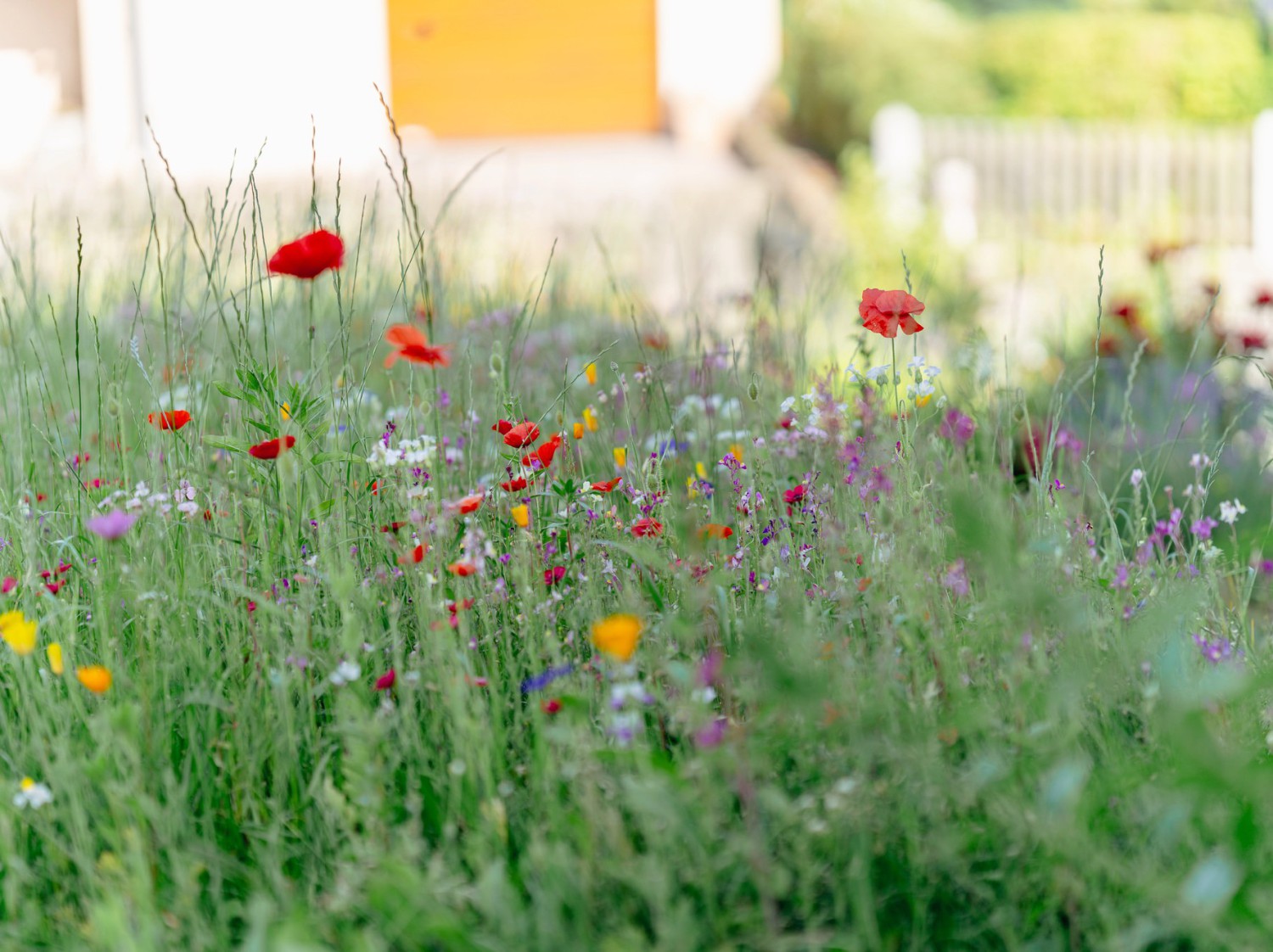
For a long time, an emerald green, well-manicured lawn served as the standard. Nowadays, however, many homeowners are converting part of their yard into a wildflower meadow (see main photo). In some places, this style of landscaping can even be applied across a property’s entire front yard, infusing the suburbs with a playful atmosphere.
Comprising a mix of perennial and annual flowers, these meadows
- attract butterflies, bees, and many other beneficial insects;
- require far less mowing than a traditional lawn;
- typically cope better with heat waves.
You don’t need to convert your whole garden. A narrow strip of flowers planted along a fence or at the front of the house can bring a burst of colour and support biodiversity.
Pollinator-Friendly Gardens
Bees, butterflies, and many other pollinating insects play a vital role in the cultivation of numerous fruits, vegetables, and flowers. As we all know, their populations have been dwindling.
Several municipalities are now advising residents to let dandelions grow throughout May to support pollinating insects.
Many people go above and beyond by designing a garden that caters to pollinators’ specific needs! Plants that produce nectar and pollen throughout the summer include lavender, echinacea, bee balm, goldenrod, milkweed, and rudbeckia.
This approach also contributes to reducing pesticide use and diversifying the garden’s plant species, ensuring a succession of blooms from spring to autumn.
Rainwater Harvesting: A Growing Habit
With increasingly frequent periods of drought in several regions, many people now wish to conserve water more effectively.
Rainwater collection barrels have become extremely popular. Installed beneath a gutter, they catch the water that runs off the roof so it can be used to water flowerbeds, trees and the vegetable garden. Since municipalities generally impose watering restrictions, rainwater barrels are a practical solution!
Several models are now designed to blend in seamlessly and discreetly with the landscaping.
The appeal of native plants
Adding a few native plants to your flowerbeds is a simple way of creating a sustainable garden while cutting down on the time spent maintaining it.
Why? Because they grow naturally in Québec, these plants are generally better adapted to harsh winters, temperature fluctuations, and prolonged dry spells.
Compared to certain exotic species, they often need:
- less water
- less fertilizer
- less care
What’s more, they provide food and shelter for a variety of birds, insects, and small animals that inhabit our ecosystems.
A thoughtfully designed garden is about more than aesthetics: it’s about fostering diversity and making the backyard a more inviting spot to relax in, season after season. It’s a good thing, then, that these garden trends are set to continue well into the future!